


We use Cookies!
Our website uses cookies. We use cookies to offer you a better browsing experience, analyze site traffic, personalize content, and serve targeted advertisements.
Learn more about how we use cookies and how to manage them by clicking "Cookie-settings".
Understanding the impact of AIS Class M regulations on MOBs
In the ever-evolving landscape of maritime safety regulations, a recent development is poised to transform how we handle incidents involving smart man-overboard (MOB) alerts at sea. European Regulation ECC/DEC/(22)02, introduced in 2022, has sparked significant discussion and prompted adjustments within the maritime community, particularly regarding AIS (Automatic Identification System) man-overboard beacons. Let us delve into the details of the AIS Class M regulation—or ECC/DEC/(22)02—and examine its implications for maritime safety.
Understanding ECC/DEC/(22)02
ECC/DEC/(22)02, also known as the AIS Class M regulation, represents a proactive step toward enhancing the efficiency and reliability of AIS transmissions in European waters. Introduced to mitigate the risk of AIS channel congestion caused by non-essential onboard equipment—such as fishing net markers—this regulation imposes stricter requirements on AIS MOB devices.
Key Provisions and Implications
The significance of ECC/DEC/(22)02 lies in the classification of AIS MOB devices. From December 31, 2024, only Class M DSC (Digital Selective Calling) MOB devices and Mobile AtoN (Mobile Aid to Navigation) units are permitted to use AIS channels 1 and 2. This distinction aims to prioritize critical distress signals and streamline smart alert communications between vessels and search-and-rescue services. Impact on AIS Man Overboard Beacons
For manufacturers and users of AIS Man Overboard Beacons, ECC/DEC/(22)02 heralds a paradigm shift regarding equipment design and functionality. Existing AIS MOB devices that lack DSC functionality or receivers may face restrictions in certain countries. Consequently, vessel operators must ensure their equipment meets Class M standards to comply with regulations and maximize safety.
Ocean Signal rescueME MOB2: Meeting Class M Standards
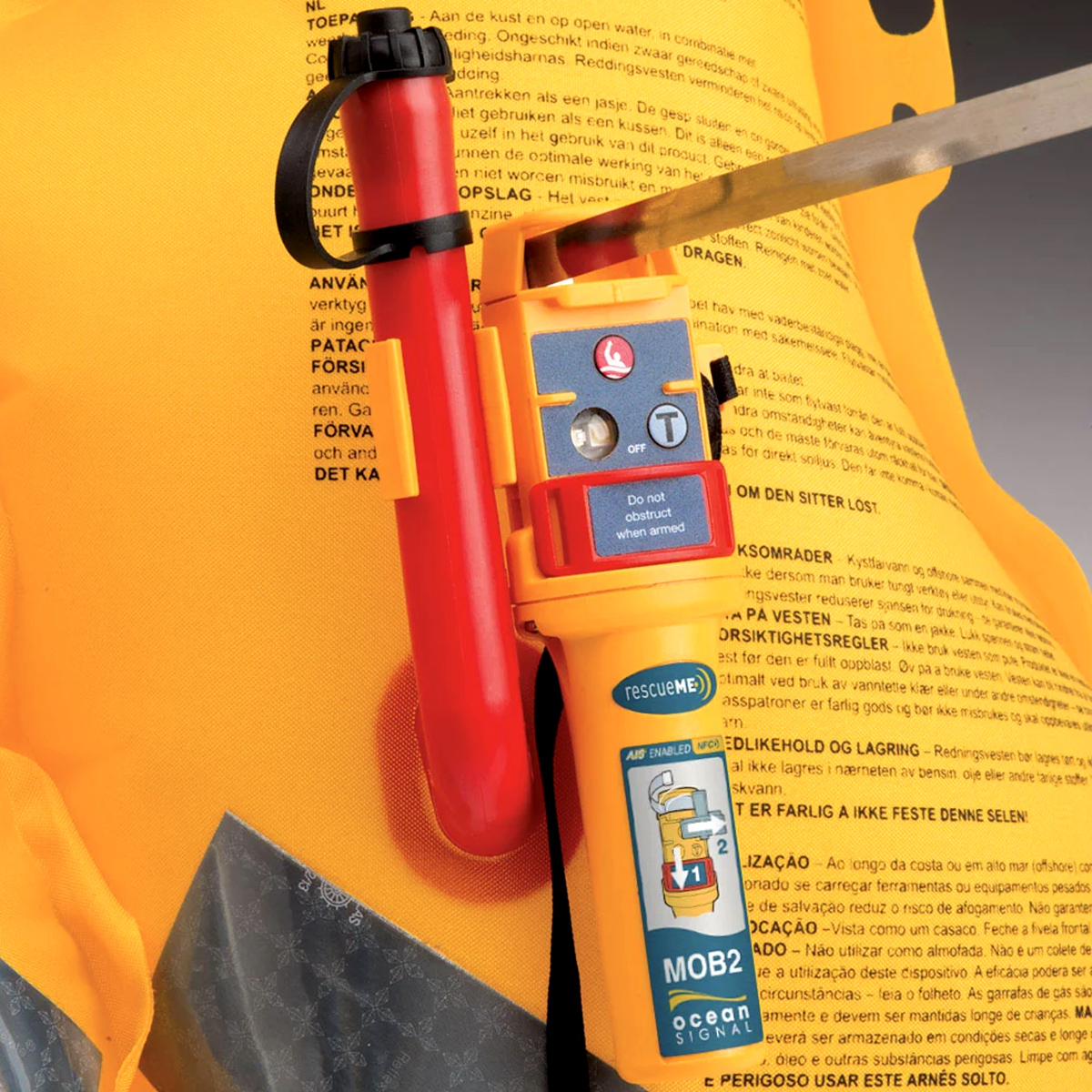
Amidst evolving regulations, Ocean Signal emerges as a beacon of innovation with its new rescueME MOB2 AIS Man Overboard Beacon. Designed to meet Class M requirements, the MOB2 leads the way in compact yet powerful maritime safety solutions. Equipped with two-way signaling, real-time AIS positioning, and seamless DSC integration for rapid alerts, the MOB2 ensures unmatched reliability and effectiveness in MOB scenarios—all at a fraction of the size of other devices on the market.
Conclusion
As ECC/DEC/(22)02 comes into effect, its significance resonates throughout the maritime sector, ushering in a new era of regulation and compliance for AIS MOB beacons. By embracing Class M standards and investing in advanced smart-alert technologies like the Ocean Signal MOB2, vessel operators can confidently navigate these changes, protect lives, and enhance safety at sea. Stay informed, ensure compliance, and prioritize safety—because on the open ocean, every second counts.